There is an entire category of founders for whom a product's personality is a rotating set of things that other people (from branding, from growth, from the competitor who just launched something similar) have decided to include, with little meaningful thought put into why they were there besides "this is cool" and "not as bad as the last one we did."
The shift is easy to date. A few years back, a competing company would spend six months cloning your best product. Today, it takes them two weeks. Pick your favorite three B2B products within a category, line them up side by side, and see how far you get before you start seeing the same features and UI elements repeated across the board. Every project management tool now has a Kanban view, every CRM has a pipeline view, and the average overlap between the leaders in a category runs to 85%, sometimes more, long before AI made feature cloning a task that only takes a couple of weeks. The feature you are most proud of is the one that will be stolen next.
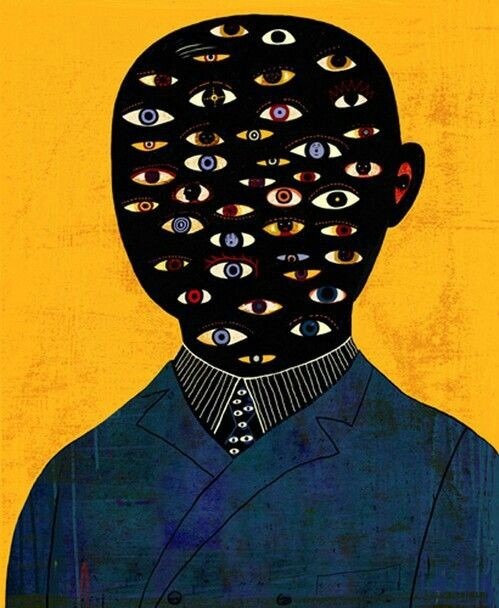
So the word "personality" gets reached for. And this is where it starts to lose its meaning the way most useful words do under pressure: through repetition without definition. Ask a product team what their product feels like to use and watch what happens. They'll walk you through the roadmap. They won't tell you what it feels like. The word has been kept, the content behind it has quietly gone. I've started calling this product aphantasia.
Then there's "refusal," maybe the only one of these words that still sounds correct even after it's been hollowed out, which is exactly what makes it dangerous. In the founder script, it's flattened into a personality trait, "we're opinionated," stated once on an About page and never actually tested against a real request. Linear entered a category owned by Jira and Asana, both with more resources, more integrations, more users, and its bet was that you can't build the optimal tool for anything if it's endlessly customizable. So it said no to features, repeatedly, long after it would have been easier to say yes. That's refusal doing actual work: not a stated value, but a boundary that holds under pressure.
Then there's "distribution." In the founder script, it's been recast as ads, a line item to buy once you get around to it. It's not just that we've hollowed out the word, we've inverted its intent. Distribution used to be a characteristic of the product, something inherent to it, and now it's an add-on that very few people are actually responsible for. Ramp's corporate card flags duplicate subscriptions and unauthorized purchases, and companies that use it spend 5% less on average, and a card that saves its own customers money is the kind of thing one finance team recommends to another, unpaid, which is distribution a media budget can't buy. That's what distribution built into the product actually looks like: an exclusive, direct, tangible relationship a bigger platform can't offer.
And "community", that most egregious of words that have been drained of all meaning and context, now used as an umbrella term for any vague feelings of energy one might experience while looking at a logo or reading a mission statement. A Discord server with a welcome message is not a community. The actual thing is closer to what "being off-platform" means. One doesn't need to be on a server to be part of a community. A list, a direct connection, something a feed or an interface can't encompass, that's the opposite of being on-platform and entirely at the mercy of forces beyond one's control. There's a reason an algorithm update is more of a threat to some businesses than others. A community has its own infrastructure, rules, and value. It is a relationship of sorts, not with a brand, but with a particular set of people who aren't "users," at least not in the way one would define them while pitching to VCs.
"X factor", probably the most egregious of these terms, the one that has replaced "quantum" in the Silicon Valley script, used to signify something that wasn't really engineered for but rather just happened, a vague excuse for things no one could explain but which had a happy outcome nonetheless. Figma, the design software, has network effects and timing in abundance. At launch, not a single designer in its target audience would have been excited about the prospect of collaborative design tools. Figma built it anyway, and it forced the hand of the industry, a judicious combination of virality, network effects, and timing. The company behind it didn't refer to it as the X factor. They recognized it as a product and engineered it as such. The bet paid off.
That's the kind of thinking that goes into each product, really. Refusal, distribution, community, and X factor: each one of these terms begins and ends with something concrete, a particular set of actions and attitudes that are inherent to the product itself rather than its marketing or positioning. One can refuse and have nothing to distribute. One can distribute widely and have refused nothing, which is just noise with reach. One can have both and never build a real relationship with anyone, a business that's one algorithm update away from disappearing. One can have all three and still miss the specific, unrepeatable bet that turns a good product into an inevitable one. Personality isn't a fifth thing that arrives after these four; it's what you get once a product treats all four as decisions rather than descriptions.
Founders who have this figured out are no longer talking about features. They're having conversations about what to refuse, how to distribute their own product, how to build direct relations, and where to take an aggressive position on an asymmetric opportunity. One word, one concept for each of these things, rather than a vague statement of intent that covers none of them.