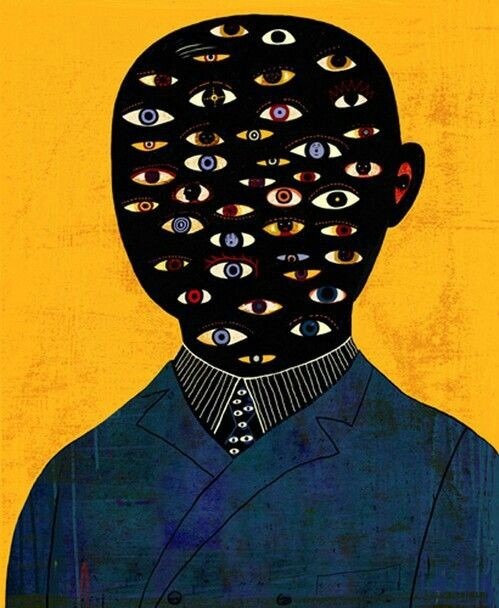
Next time you scroll, pull down on your screen for a fraction of a second, and notice that blank beat before it snaps back and new content spills in. Was that pause there to help your content load faster? Not really. That’s behavior frequency at work, engineered to get you to return, regardless of whether you’d ever sit down and endorse wanting to.
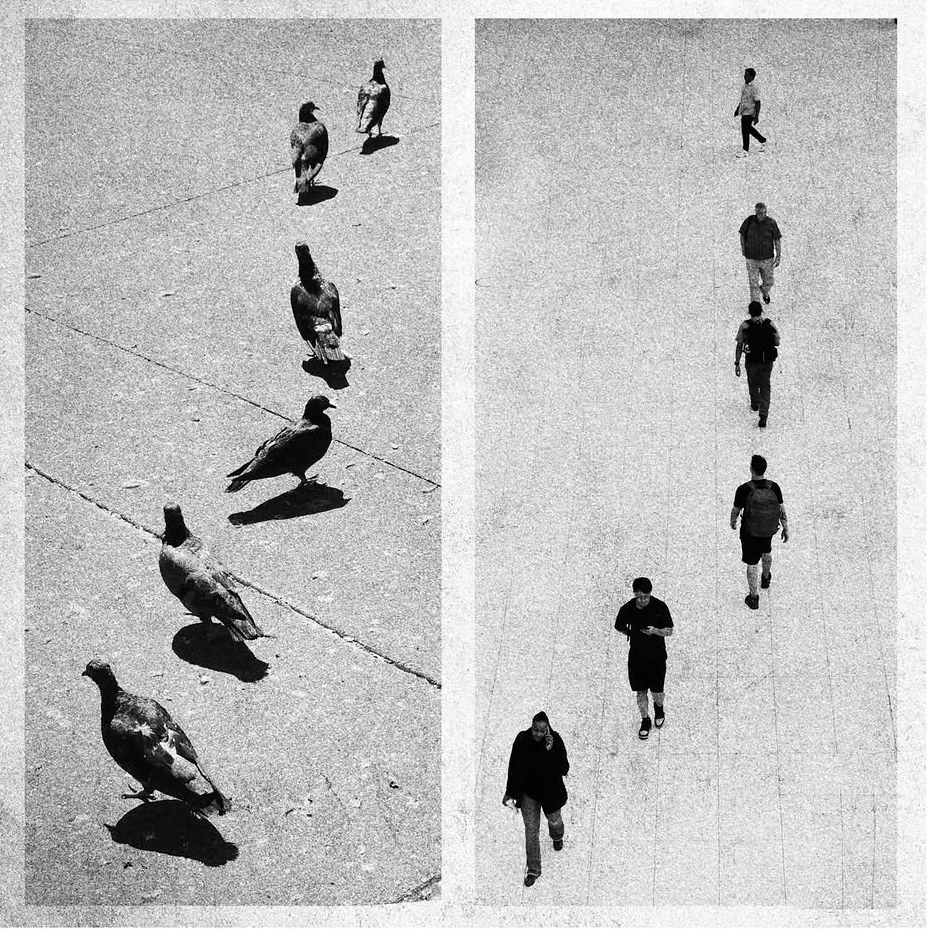
This reminds me of an experiment in the 50s, meant to weaponize pigeons, that placed hungry pigeons in a conditioning chamber, the Skinner box. The pigeons were rewarded with food for pecking precisely. Once the behaviour was established, the food stopped entirely, and the pigeon kept responding for a while before it finally quit.
It turns out that unpredictable rewards get people hooked more than predictable ones. A predictable reward teaches the organism the rule and it stops checking once satisfied. An unpredictable one keeps the checking itself reinforced. This is the actual mechanism the slot machine borrows, tuned by engineers and designers.
But conflating checking with loyalty isn’t just a semantics problem. Here’s what most growth teams get wrong about this, though, including, for a long time, me. Unpredictability produces checking. It does not produce loyalty. Those are two different curves, and reinforcement schedules only ever built the first one. A pigeon that pecks compulsively for a reward that’s stopped coming isn’t a loyal pigeon. That’s the beginning of churn wearing retention’s numbers for a while.
A product built with nothing underneath it, once the checking stops paying off, is building a pigeon that will eventually stop pecking. To last, the systems must use this unpredictability to buy just enough time for actual utility and relationship.
Skinner extended this pigeon logic to humans directly. The theory didn’t hold up under scrutiny, and yet tech never had to sit with that loss. It just renamed the parts. Operant conditioning is now engagement. Reinforcement schedule is the new growth loop. What keeps me checking gets called retention, as if the pull-down gesture were expanding what I can do, rather than narrowing what I keep doing.
Only the words wrapped around the mechanism changed, to let you stand inside the system and call yourself a participant, while “conditioning” would put you on the other side of the glass, watching yourself the way you’d watch the pigeon.
That same efficiency, using less to know a person and get more from them, is what actually separates this from marketing as it used to work. And interestingly, this isn’t really about persuasion anymore. Old marketing had to find a want I already had and speak to it. Attention economy is a different discipline entirely, it doesn’t need to find an existing want. It can build the checking behavior directly, installing the “want.” That’s what makes this “better” marketing, in the most literal sense, it got more efficient by needing to know less about who I actually am.
Which is, if I sit with it long enough, a strange kind of relief. The pull to check isn’t a verdict on my character as the system doesn’t need my specific wants, it needs a rule general enough to work on anyone. So, I’m just the substrate. Not the target?
But being the substrate doesn’t make the arrangement neutral. The pigeon in the box never had to consent to hunger, or to which reward schedule would run its behavior. It also never profited from its own responding. Someone designed the schedule. Someone is paid according to how well it works. And on my side of it, I don’t experience myself as a subject in an experiment, I experience myself as a person choosing to check my phone, which is exactly the feeling a well-built reinforcement schedule is supposed to produce. The sense of choosing was manufactured, right alongside the behavior, so the two would arrive together and feel indistinguishable.
I don’t think the answer is to distrust every want I have. Just to notice that some of my wanting has an author, and it isn’t me.
But here’s the claim I’m less sure I should make, and I’m going to make it anyway: I don’t think that disqualifies the want. A want built by something outside me isn’t automatically a lesser one, my hunger has an author too, and so do my fears, and I’ve never demanded either explain itself before I trusted it. What actually matters isn’t where the want came from. It’s whether I’d still choose it if I could see the schedule that built it.